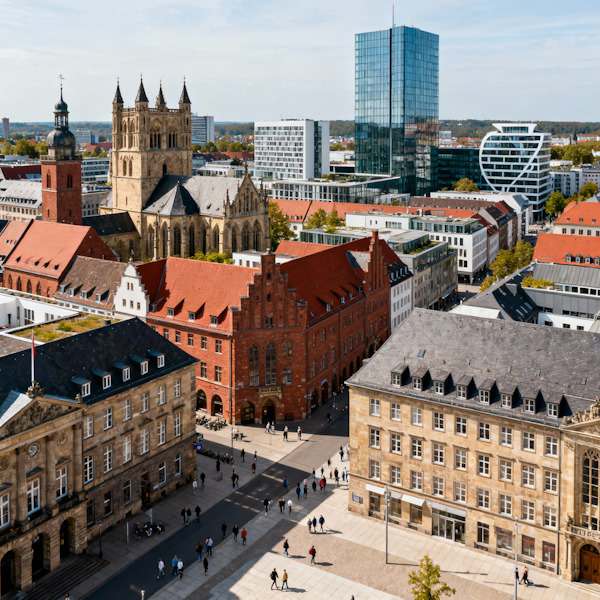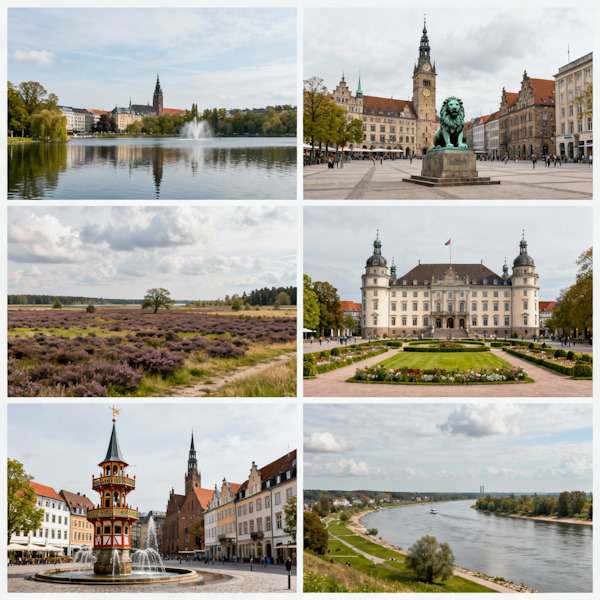
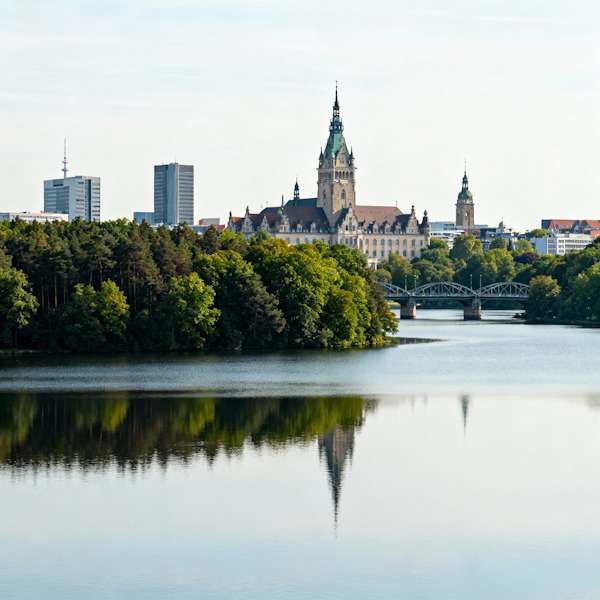
Hannover is the political and logistical heart of Lower Saxony, a green city wrapped around Maschsee lake and the Eilenriede urban forest. It is the largest city in the state by population, with a metropolitan region that stretches into surrounding towns. Beyond practical advantages like fast trains and a clear street grid, Hannover offers deep history, strong cultural life, an exhibition center with global reach, and sports traditions that shape local identity.
This article introduces Hannover from the top down. You will find population context, a plain-language history timeline, major sights and cultural institutions, the shape of the local economy and industry, sports and famous clubs, notable people linked to the city, and key historical events. A final section gives practical starter tips for newcomers who plan to study, work, and settle here.
At a Glance: Location and Population
Hannover sits on the River Leine in northwestern Germany. It anchors a wider region that includes many commuter towns connected by rail and road. The city has roughly half a million residents, while the broader Hannover Region holds well over a million people. Daily life feels balanced, with compact districts, extensive parks, and a public transport system that links neighborhoods to the central station in minutes.
Climate is temperate with cool winters and mild summers. Rain can arrive quickly, so locals carry a compact jacket and plan short indoor breaks around showers.
History Timeline
Hannover’s past is visible in street plans, churches, rebuilt quarters, and in the way the city hosts international fairs. This timeline highlights turning points that shaped the city’s identity.
Medieval Origins
The settlement began as a small trading post and river crossing, where merchants and craftspeople gathered near the Leine. Over the centuries, city rights and market privileges drew more residents, and the old town’s narrow lanes and churches took form.
The House of Hanover and the British Connection
From the early 18th century, the Electorate of Hanover entered a personal union with Great Britain when Elector Georg Ludwig became King George I of Great Britain. For more than a century, the crowns were linked through the House of Hanover. Court life, diplomatic ties, and military affairs connected Hannover with wider European politics, leaving a legacy felt in archives, collections, and place names.
Industrial Growth in the 19th and Early 20th Centuries
Railways, engineering workshops, and insurance companies arrived, and the city expanded beyond its medieval core. New boulevards and factory districts appeared, laying foundations for industries that still matter today, such as transport technology, tires, and machinery.
War, Destruction, and Rebuilding
Hannover suffered heavy damage during the Second World War. The post-war years brought large-scale reconstruction, wider streets, and green spaces integrated into the urban plan. Cultural institutions were rebuilt or reborn, and the city’s role as a trade-fair location grew rapidly.
Expo 2000 and the Modern Era
Hannover hosted Expo 2000, the world exposition that showcased sustainability and innovation. Though opinions differed at the time, the event accelerated infrastructure, modernized parts of the exhibition grounds, and reinforced Hannover’s international profile. Today the city continues to blend practical urban planning with cultural life and international business activity.
Culture, Sights, and Everyday Life
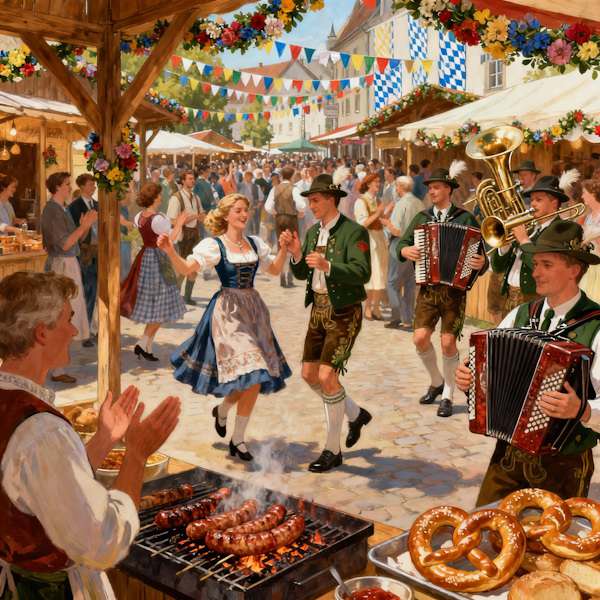
Hannover’s culture is comfortable rather than flashy, with art, design, and gardens at its core. You can visit a museum in the morning, cycle through a forest at lunch, and attend an opera, handball match, or neighborhood festival in the evening.
- Herrenhausen Gardens: A baroque showpiece with formal geometry, fountains, and seasonal events. It is one of the city’s defining sights. For hours and exhibits, see the official page on hannover.de.
- Sprengel Museum: A major collection of modern art with works by international and German artists, located near Maschsee.
- Lower Saxony State Museum: Natural history, archaeology, and art under one roof, helpful for families and students.
- Staatsoper Hannover: Opera and ballet in a classic house near the city center, with reasonable standing tickets for newcomers.
- Eilenriede: One of Europe’s largest urban forests, with bike lanes and quiet paths only minutes from busy streets.
- Niki de Saint Phalle’s Nanas: Colorful sculptures by the river that have become local symbols of playfulness and art in public space.
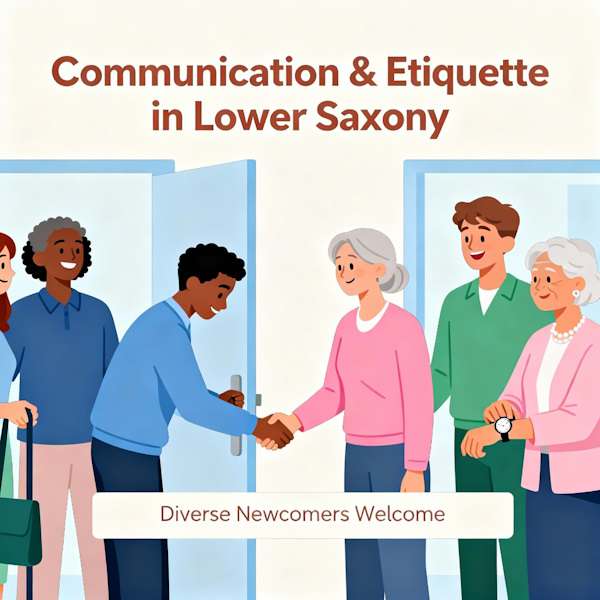
Everyday culture values punctuality, straightforward communication, and respect for quiet hours. If you are new to German customs, our plain guide on politeness and everyday etiquette in Lower Saxony helps you adjust smoothly.
Economy and Industry
Hannover’s economy mixes public administration with private industry and services. Several sectors stand out and provide jobs for a wide range of profiles.
- Insurance and finance: Major insurers and financial services maintain headquarters or large offices in the city, supporting roles from IT to compliance.
- Automotive and mobility technologies: Suppliers and engineering firms operate across the region, with deep roots in tires, testing, and vehicle systems.
- Trade fairs and exhibitions: The Hannover exhibition grounds host large industrial fairs, business conferences, and special events. This creates work in logistics, stand building, media, and hospitality.
- Education and health: Universities and research centers, along with the medical school and hospitals, generate stable employment in teaching, labs, and clinical services.
- IT and services: Software, data, and professional services have grown around established industries, creating demand for project managers and multilingual support roles.
For city contacts, event calendars, and relocation help, the official English portal at hannover.de is a reliable starting point.
Sports and Famous Clubs
Sport is part of Hannover’s identity, from football afternoons to handball nights. Local clubs have loyal fan bases and long histories.
- Hannover 96: The city’s best-known football club, with German championships in earlier decades and a DFB-Pokal triumph as a second-tier team. Matchdays shape the atmosphere across the center and southern districts.
- TSV Hannover-Burgdorf: A top-flight handball club often referred to as “Die Recken,” drawing passionate crowds and family-friendly supporters.
- Ice hockey and more: Traditional clubs in ice hockey and field hockey attract dedicated local followings, and community teams in athletics and rowing benefit from proximity to parks and Maschsee.
Even if you are not a fan, a live match offers an easy window into local culture, chants, and weekend routines.
Notable People Linked to Hannover
Hannover’s network of scholars, artists, and political figures stretches across centuries. A short list highlights the range.
- Gottfried Wilhelm Leibniz: Philosopher and mathematician connected to the Hanoverian court, whose work shaped logic, calculus, and library science.
- The Hanoverian Kings of Britain: Starting with George I, the royal line linked Hannover and Great Britain for more than a century.
- Hannah Arendt: Political theorist born in Linden, whose writings on totalitarianism and civic responsibility remain highly influential.
- Gerhard Schröder: Lawyer and former Minister-President of Lower Saxony who later served as Chancellor of Germany.
- Scorpions: The rock band formed in Hannover, recognized worldwide for songs that became symbols of the late twentieth century.
Key Historical Events
Several moments left strong marks on the city’s fabric and memory.
- Personal union with Britain: The 18th and early 19th century connection shaped diplomacy, collections, and the city’s status in Europe.
- Prussian annexation: Nineteenth-century changes in German statehood altered Hannover’s political position and administrative structures.
- Second World War bombing: Wartime destruction and the post-war reconstruction defined much of the modern street layout and architecture.
- Expo 2000: The world exposition modernized infrastructure and reinforced Hannover’s identity as a fair and conference city.
Neighborhoods and Housing
Districts vary in pace and price, but most are within easy reach of the center. Choose an area that fits your routine, then test your morning and evening route before signing a long contract.
- Linden: Lively streets, markets, and quick trams. Popular with students and young professionals.
- List: Tree-lined avenues and stable housing stock, useful for families and those who want quieter evenings.
- Südstadt: Near Maschsee, a balanced choice with parks and short connections to the center.
- Vahrenwald and Nordstadt: Practical locations with fast access to the main station and university areas.
- Döhren–Wülfel and Misburg–Anderten: Calmer eastern and southern districts with more space. Confirm bus frequency if you work late.
Transport and Getting Around
Hannover’s public transport is straightforward. Trams and buses form a dense network, and the main station connects quickly to other Lower Saxony hubs. Cycling is common, with marked lanes across central districts. Many residents combine a monthly city pass with occasional regional tickets for weekend trips.
For newcomers who plan to explore the state by train, our state-wide transport primer covers day tickets, planning routines, and simple itineraries in the city and region guide to Lower Saxony.
Newcomer Corner: Practical First-Month Tips
Use this checklist to reduce stress in your first weeks. It focuses on everyday routines that help you feel at home faster.
- Documents and accounts: Scan your ID, rental contract, and insurance card. Save them in a secure cloud folder and a phone notes app.
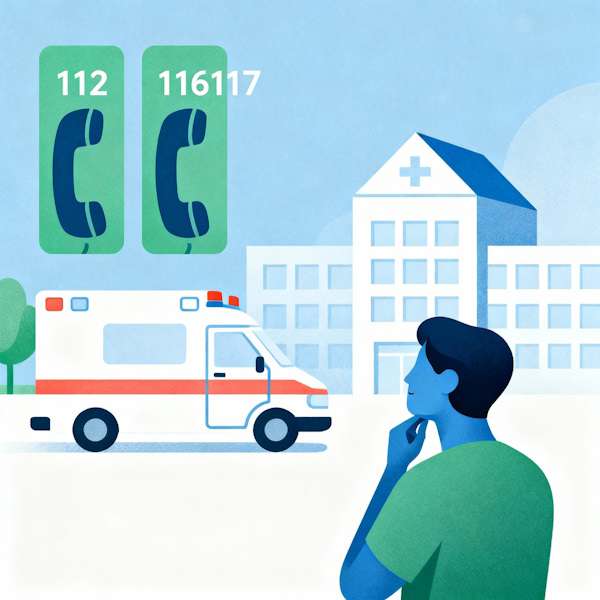
- Health basics: Identify your nearest clinic and pharmacy. For life-threatening emergencies call 112. For after-hours non-emergency help dial 116117 to reach the medical on-call service.
- Shopping rhythm: Plan groceries around Sunday closures. For savings, see tips in our smart grocery shopping guide.
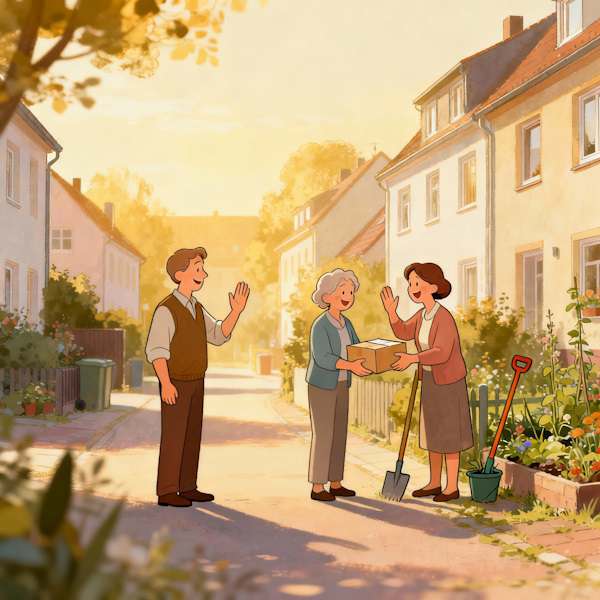
- Etiquette and neighbors: Learn local expectations on punctuality and noise. A quick read of everyday etiquette for Lower Saxony prevents common misunderstandings.
- Joining in: Look for a sports club, language tandem, or volunteer day once per month. Small routines help you build a circle of friends.
Read more: Understand 112, 116117, and hospital emergency departments in Lower Saxony
When you are ready for deeper exploration, browse sights, events, and city services at the official portal hannover.de. The combination of clear transport, accessible green spaces, and reliable services makes Hannover a strong first home in Lower Saxony.